culture

Neighborhood · Incorporated city
Fifteen blocks of village between the racetrack and the bluff, and a fight over the fairgrounds in every election cycle.
Population
Median home value
Aug high / Jan low
To downtown
culture

food
culture
culture
food
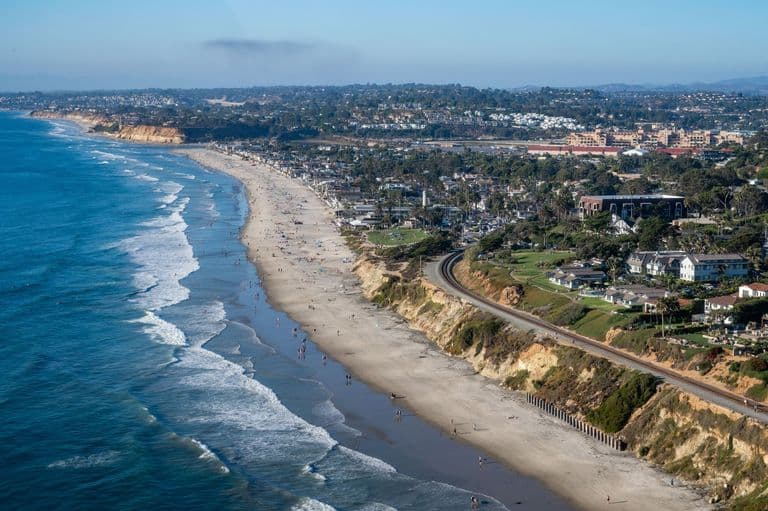
Del Mar is one of the smallest cities in San Diego County, a village of about 1.8 square miles and fewer than 4,000 residents between Torrey Pines and the San Dieguito River. It was laid out in 1885 as a seaside resort for wealthy visitors and incorporated in 1959, largely so residents could control development and keep high-rises off the bluffs. That choice still defines the place: a short commercial strip along Camino Del Mar, cottages and modern hillside houses, and a public beach that runs nearly the length of town. The city's name is known far beyond its size because of the Del Mar Fairgrounds and racetrack at its northern edge. Bing Crosby helped open the track in 1937, and the San Diego County Fair draws huge crowds each June and July. Those events bring traffic and a seasonal economy, while the rest of the year Del Mar is quiet, older and very affluent, with a median resident age above 55 and a median household income near $200,000. Housing here is among the most expensive in California, with a typical value around $3.8 million in mid-2026. The main civic issues are the same ones that shaped the town at incorporation: bluff erosion under the coastal rail line, beach sand loss, state housing mandates that push against the low-scale village plan, and the future of the state-owned fairgrounds.
Draws
Tradeoffs
Good for: Affluent households and retirees who want a walkable beach village and do not mind summer crowds.
Del Mar's beach and bluffs sit in the full marine influence, so summer highs stay in the low 70s at the sand while the fairgrounds and the San Dieguito valley just inland run several degrees warmer. May Gray and June Gloom often coincide with the county fair, and fog can linger over the lagoon mornings well into July. Santa Ana winds in fall and winter bring the rare hot, dry days.
Aug avg high
Jan avg low
Annual rain
Best time to visit: Late August through October, when the marine layer thins, the ocean is warmest and the summer race meet and fall events are on.
Typical home value $3,831,646 (+7.2% year over year)
Beach cottages and rebuilt modern homes on small lots west of Camino Del Mar, larger view homes on the hillside east of it, and a limited number of condos. Very little new multifamily housing exists.
Freeways: I-5
Transit: The nearest rail station is Solana Beach (Coaster and Amtrak Pacific Surfliner); NCTD Breeze Route 101 runs along Camino Del Mar.
Parking: Metered street and lot parking near the beach is limited and fills fast in summer and during fair and race days.
Walkability: The village core along Camino Del Mar is compact and walkable; the east-side hillside streets are steep and car-oriented.
Del Mar offers a walkable beach village, strong schools and a median household income near $200,000, according to Census estimates. The city has only about 3,900 residents, so it feels quiet outside fair and racing season. The main drawbacks are cost and summer event traffic.
Zillow's Home Value Index put the typical Del Mar home at $3,831,646 in June 2026, up 7.2 percent from a year earlier. That makes it one of the priciest markets in San Diego County.
NOAA normals from the nearby Oceanside Marina station show January averaging 63 degrees for a high and 47 for a low, with August averaging 71 and 66. Rain totals about 10 inches a year, almost all between November and March.
Del Mar is known for its racetrack, opened in 1937 with Bing Crosby, and for hosting the San Diego County Fair every summer. It is also known for its dog-friendly North Beach and its bluff-top parks.
Del Mar runs a summer thoroughbred meet that traditionally opens in mid-July and ends around Labor Day, plus a fall Bing Crosby Season, scheduled for Nov. 6-29 in 2026.