culture

Neighborhood · Incorporated city
Cedros Avenue design district, the Belly Up, and the quietest stretch of the 101 north of Torrey Pines.
Population
Median home value
Aug high / Jan low
To downtown
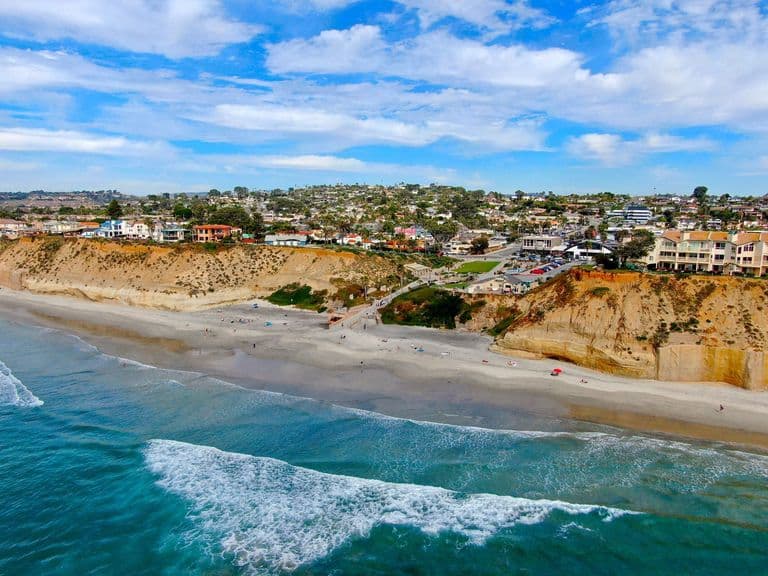
Solana Beach is a small coastal city of about 12,600 people squeezed between Del Mar and Cardiff, with the San Elijo Lagoon on its northern edge. Col. Ed Fletcher laid out the town in 1922 and used high-pressure water to cut a path through the bluff to the sand, creating what is now Fletcher Cove. The community voted to incorporate in 1986, the same year Encinitas did, largely to take control of local planning from the county. The city's identity is split by Interstate 5. West of the freeway, bluff-top condos and beach houses line the coast, Highway 101 carries a steady mix of cafes and surf shops, and the Cedros Design District packs design stores, galleries and restaurants into a few blocks beside the rail station. East of I-5, Lomas Santa Fe Drive leads to quieter subdivisions and golf. La Colonia de Eden Gardens, founded by Mexican farm families in the 1920s, remains one of the oldest neighborhoods in the county's north coast. Solana Beach is known for its music venue, the Belly Up, which has booked touring acts since 1974, and for its train station, one of the few North County stops served by both Coaster and Amtrak trains. The typical home value was about $2.26 million in mid-2026. Current debates center on bluff erosion and sand replenishment, the long-running effort to add housing near the station, and keeping Cedros's independent character as rents rise.
Draws
Tradeoffs
Good for: Commuters and families who want a small, walkable beach town with train access and a strong school district.
West of I-5, Solana Beach stays cool and even-tempered, with marine layer mornings common from May through early July. East of the freeway, along Lomas Santa Fe Drive and toward Rancho Santa Fe, afternoons run noticeably warmer. Occasional Santa Ana days in fall bring the year's hottest and clearest weather at the beach.
Aug avg high
Jan avg low
Annual rain
Best time to visit: September and October offer the warmest water, the clearest days and fewer beach crowds.
Typical home value $2,257,688 (+6.1% year over year) · median rent $3,212
Bluff-top condominium complexes and beach houses west of I-5, small older homes in Eden Gardens, and 1970s-1990s single-family subdivisions and planned communities east of the freeway.
Freeways: I-5
Transit: Solana Beach station serves the Coaster and Amtrak Pacific Surfliner; NCTD Breeze Route 101 runs along Highway 101.
Parking: The station lot and Cedros street parking are free but tight on show nights and weekends, and Fletcher Cove's small lot fills early.
Walkability: West of I-5 is walkable and bikeable along Highway 101 and the rail trail; east of the freeway is largely car-dependent.
Solana Beach combines a walkable coastal core, strong schools and a rail station with Coaster and Amtrak service. The Census Bureau estimates a median household income of $152,167. The tradeoffs are high costs and bluff erosion that affects beach access.
Zillow's Home Value Index put the typical Solana Beach home at $2,257,688 in June 2026, up 6.1 percent over the year. Renters pay a median gross rent of $3,212, according to 2020-2024 Census estimates.
Based on NOAA normals from the Oceanside Marina station, January highs average about 63 degrees with lows near 47, and August highs average about 71 with lows near 66. Annual rainfall is roughly 10 inches.
Solana Beach is known for Fletcher Cove, the Cedros Design District and the Belly Up music venue. It was also the first city in the continental U.S. to ban smoking on its beaches, in 2003.
Yes. Solana Beach station is a stop for both the NCTD Coaster and Amtrak's Pacific Surfliner, making it a practical base for trips to downtown San Diego or Los Angeles.