culture

Neighborhood · City of San Diego neighborhood
Cliffs, coves and the highest commercial rents in the county. Old money, biotech money, and sea lions that predate both.
Population
Median home value
Aug high / Jan low
To downtown
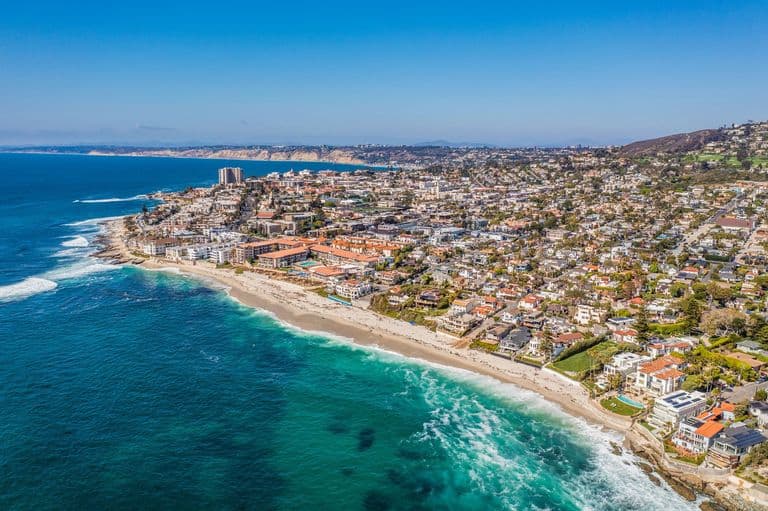
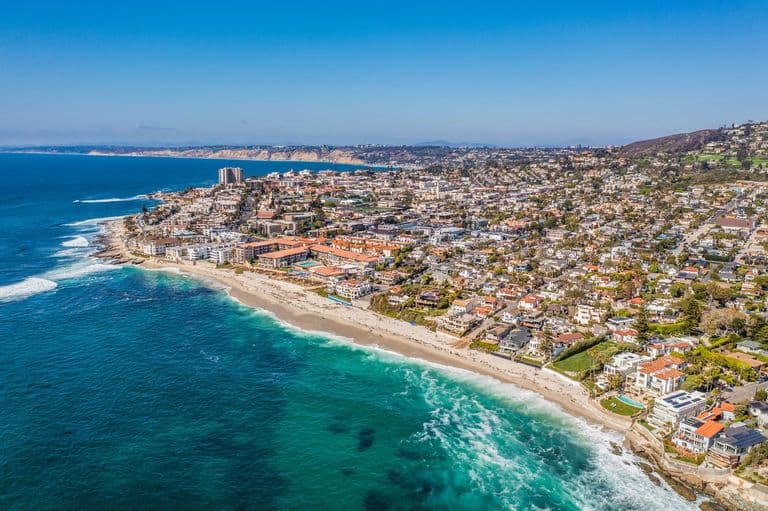
La Jolla is a coastal community inside the City of San Diego, spread across roughly seven miles of shoreline between Pacific Beach and Torrey Pines. It covers several distinct areas: the Village with its shops and galleries above La Jolla Cove, the flat, family-oriented streets of La Jolla Shores, the hillside homes of Mount Soledad and Bird Rock, and the university district around UC San Diego. The name is often traced to a Kumeyaay phrase for 'land of holes,' a likely reference to the sea caves carved into the sandstone cliffs. Much of the place's character comes from science and philanthropy. Ellen Browning Scripps funded civic landmarks here, the Scripps Institution of Oceanography dates to 1903, UC San Diego opened in 1960, and the Salk Institute sits on the mesa above the Pacific. The result is a population of researchers, physicians, retirees and long-established families, with a median household income in ZIP 92037 of about $147,000. For visitors, La Jolla means the Cove, the sea lions on the rocks, kayak trips to the caves and the tide pools below the bluffs. For residents, it means some of the highest home prices in the county, a typical value around $2.4 million, and a constant tension between tourism and neighborhood life, visible in fights over parking, short-term rentals and the seals at Children's Pool. Change comes slowly: height limits and an active community planning group keep the Village low-rise, while UC San Diego's growth brings trolley service and new housing to the northern edge.
Scripps Institution's public aquarium on a La Jolla bluff — tide-pool touch tanks, a two-story kelp forest and big ocean views.
A postcard cove where sea lions and seals haul out on the rocks — snorkeling, kayaking and clifftop views over the ecological reserve.
A hilltop veterans memorial with one of the widest 360-degree views in the county, from the coast to the mountains.
Rare Torrey pines, sandstone canyons and miles of clifftop trails above the Pacific. Arrive early — the lot fills fast.
Draws
Tradeoffs
Good for: Households working at UC San Diego, Scripps or the Torrey Pines research campuses who want a walkable coastal village and can afford a premium market.
La Jolla sits right on the water, so its temperatures track the coastal Lindbergh Field record closely, with little daily swing and almost no frost. May Gray and June Gloom are pronounced here; the marine layer can hold over the Cove and the Shores well into the afternoon while inland neighborhoods clear. Late summer and early fall bring the warmest ocean water and the clearest days, and the upper slopes of Mount Soledad sometimes sit above the fog.
Aug avg high
Jan avg low
Annual rain
Best time to visit: September and October bring warm water, clear skies and thinner crowds than July and August.
Typical home value $2,402,108 (+5.3% year over year)
A mix of Village condos and older apartments, 1920s-1950s cottages in the Shores and Windansea areas, and large custom homes on Mount Soledad and in La Jolla Farms. Lots on the hillsides are larger and view-driven, while the Village and Bird Rock have narrow, walkable blocks.
Freeways: I-5
Transit: The UC San Diego Blue Line trolley serves the university and UTC area; MTS Route 30 links the Village with Pacific Beach, Old Town and downtown.
Parking: Free street parking near the Cove and Village fills early on weekends, so paid garages or arriving before 10 a.m. are the practical options.
Walkability: The Village, Bird Rock and La Jolla Shores are very walkable; the hillside neighborhoods are car-dependent.
For those who can afford it, La Jolla offers beaches, walkable village streets and short commutes to UC San Diego and the Torrey Pines research campuses. ZIP 92037 has a median household income of about $147,000 and a low poverty rate. The tradeoffs are tourist congestion and some of the highest home prices in San Diego County.
Zillow's Home Value Index put the typical La Jolla home at $2,402,108 in July 2026, up 5.3 percent over the year. Census estimates for ZIP 92037 show a median owner-occupied value of about $1.96 million, a figure that lags current market prices.
Using NOAA normals from nearby Lindbergh Field, January averages 66 degrees for a high and 50 for a low, while August averages 77 and 68. Annual rainfall is under 10 inches. May and June are often gray until afternoon.
La Jolla is known for the Cove, its sea lions and harbor seals, the sea caves and the Scripps Institution of Oceanography. It is also home to UC San Diego, the Salk Institute and the La Jolla Playhouse.
No. La Jolla is a community within the City of San Diego, represented by City Council District 1, although it has its own ZIP code, 92037, and a strong local identity.