civic

Neighborhood · Incorporated city
The Mile of Cars, a working port, and one of the oldest Filipino communities on the West Coast.
Population
Median home value
Aug high / Jan low
To downtown
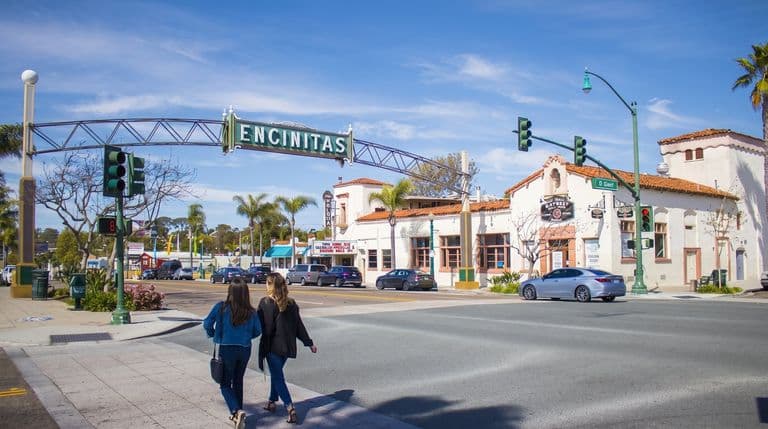
National City sits between San Diego and Chula Vista on the east shore of San Diego Bay, a compact city of about 7.3 square miles of land and 56,173 residents at the 2020 census. It incorporated in 1887, one year after Frank, Warren and Levi Kimball's development of the former Rancho de la Nacion had turned into a railroad town. The Santa Fe line made National City a western terminus in 1882, and the 1882 depot still stands as a streetcar and rail museum. The city is dense and working class, with a majority Latino population, a long-established Filipino community tied to the Navy, and roughly two-thirds of households renting. Its waterfront is dominated by Naval Base San Diego and Port of San Diego marine terminals, while National City Boulevard carries the Mile of Cars, the auto dealership row that grew out of businesses that once served sailors. Victorian houses on Brick Row and around Kimball Park recall the 1880s boom. National City has been reworking its older core in recent years with small-business projects such as the Market on 8th food hall near the 8th Street trolley station. It remains one of the more affordable places to buy or rent in the urban South Bay, with a typical home value just under $700,000 in mid-2026, and one of the most walkable cities in the county.
Draws
Tradeoffs
Good for: Renters and first-time buyers who want transit access and a short commute to downtown or the Navy base.
National City sits on the bay a few miles north of the Chula Vista station and shares its mild marine climate: gray mornings in May and June, warm but rarely hot late summers, and most rain between December and March. Neighborhoods farther east toward Paradise Hills and Plaza Bonita warm up a few degrees more on summer afternoons. Santa Ana winds in fall bring occasional heat spikes.
Aug avg high
Jan avg low
Annual rain
Best time to visit: September and October offer the warmest, clearest days, while spring is mild and less foggy than early summer.
Typical home value $692,459 (+1.9% year over year) · median rent $2,448
Small-lot bungalows, Victorian and early 20th-century houses near downtown and Kimball Park, and 1950s-1970s ranch homes on the eastside hills, alongside a large share of apartments. Only about 35 percent of homes are owner-occupied.
Freeways: I-5, I-805, SR-54
Transit: The UC San Diego Blue Line trolley stops at 8th Street and 24th Street stations, about 15 minutes from downtown San Diego; MTS buses run along National City Boulevard, Highland Avenue and Plaza Boulevard.
Parking: Metered and free street parking is usually available downtown; residential streets near the trolley can be tight in the evening.
Walkability: The grid of older streets between National City Boulevard and Highland Avenue is walkable, with shops, parks and transit close together.
It suits people who prioritize price and location. The typical home value was about $692,000 in July 2026, two trolley stations connect to downtown, and the older core is walkable, but the bayside areas sit next to freeways, the port and the Navy base.
Zillow's home value index put the typical home at $692,459 in July 2026, up 1.9% over a year. Redfin's July 2026 median sale price was $718,000, and typical rent is about $2,448 a month per Zillow.
Mild and marine-influenced. The nearby Chula Vista NOAA station averages 67.5 F highs in January and 76.9 F highs in August, with about 9.2 inches of rain a year and frequent morning clouds in May and June.
The Mile of Cars dealership row, Naval Base San Diego on its waterfront, 1880s landmarks such as Brick Row and the Santa Fe depot, and a strong Filipino and Mexican American community.
The Kimball brothers bought the land in 1868 and the city incorporated on September 17, 1887, making it one of the older incorporated cities in San Diego County.