safety

Neighborhood · Incorporated city
River park trails, the eastern end of the trolley, and a downtown plan that has been in motion for a decade.
Population
Median home value
Aug high / Jan low
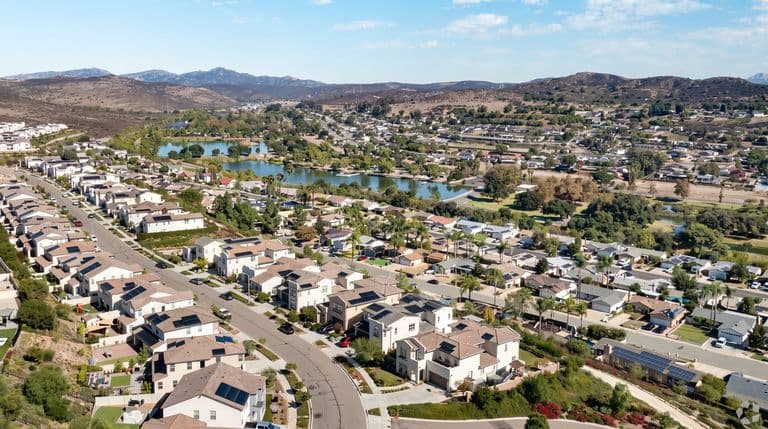
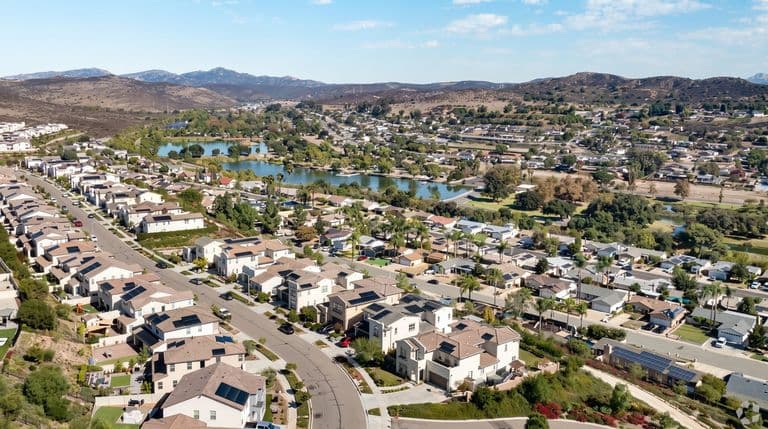
Santee is a city of about 60,000 people along the San Diego River in the northern end of East County, bordered by Mission Trails Regional Park on the west and open hills to the north. It is one of the county's younger cities, incorporated in 1980 after decades as an unincorporated farm and suburban community. The name itself is a piece of local lore: the area was first called Cowlestown after vineyard owner George Cowles, and after his death his widow married Milton Santee, who won a vote to rename the town in 1893. The river is Santee's organizing feature. A greenbelt of parks, trails and more than 1,100 acres of natural habitat runs through the middle of the city, and Santee Lakes, a 190-acre preserve built around seven lakes filled with recycled water, draws more than 700,000 visitors a year for fishing, camping and cabin stays. Santee Town Center, at the end of the trolley's Green Line, concentrates most of the shopping and the city's main community park. Housing is mostly tract homes built from the 1960s through the 2000s, along with condos, townhomes and mobile home parks, and newer subdivisions on the northern hills. The city is popular with families who work in Kearny Mesa, Mission Valley or downtown and want more space for the money. Commuters depend on SR-52 and SR-125, which can back up at rush hour, and the surrounding brush-covered hills carry real wildfire risk.
Draws
Tradeoffs
Good for: Families and outdoor-oriented commuters who want a newer suburban home near open space.
Santee has a semi-arid inland climate: hot, dry summer afternoons, cool nights in the river valley and occasional frost on winter mornings in low spots. The marine layer reaches it on early summer mornings but burns off quickly, and fall Santa Ana winds raise the fire danger on the surrounding hills.
Aug avg high
Jan avg low
Annual rain
Best time to visit: November through May, when trails in Mission Trails and along the river are green and comfortable for hiking.
Typical home value $779,610 (-2.5% year over year)
Mostly single-family tract homes from the 1960s through the 2000s, plus condos, townhomes, mobile home parks and newer hillside subdivisions on the city's north side.
Freeways: SR-52, SR-67, SR-125
Transit: The San Diego Trolley Green Line ends at Santee Town Center, with service through El Cajon, La Mesa and Mission Valley to Old Town and downtown; MTS buses cover major corridors.
Parking: Parking is plentiful at shopping centers and parks; Santee Lakes charges a vehicle day-use fee.
Walkability: The Town Center and river trail are pleasant on foot, but most neighborhoods are car-dependent subdivisions.
Santee is a popular family suburb with river trails, Santee Lakes and a trolley terminus, and homes sold for a median of about $780,000 in July 2026. Buyers should weigh the hot summers and wildfire exposure on the surrounding hills.
Redfin reported a median sale price of $779,610 in July 2026, down 2.5% from a year earlier. Homes were selling in about 20 days, with more than half going above list price.
Santee has a semi-arid inland climate. NOAA normals for nearby El Cajon show August highs near 89 degrees, January lows near 43 and about 11.6 inches of rain a year.
Santee is known for Santee Lakes, its stretch of the San Diego River, access to Mission Trails Regional Park and as the eastern end of the trolley's Green Line.
The town was originally Cowlestown, after vineyard owner George Cowles. After he died in 1887, his widow married Milton Santee, and residents voted in 1893 to rename the community after him.