culture

Neighborhood · Incorporated city
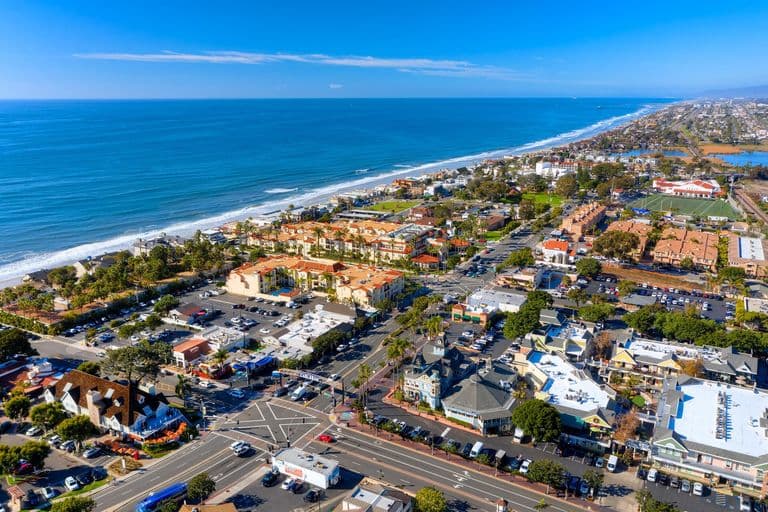
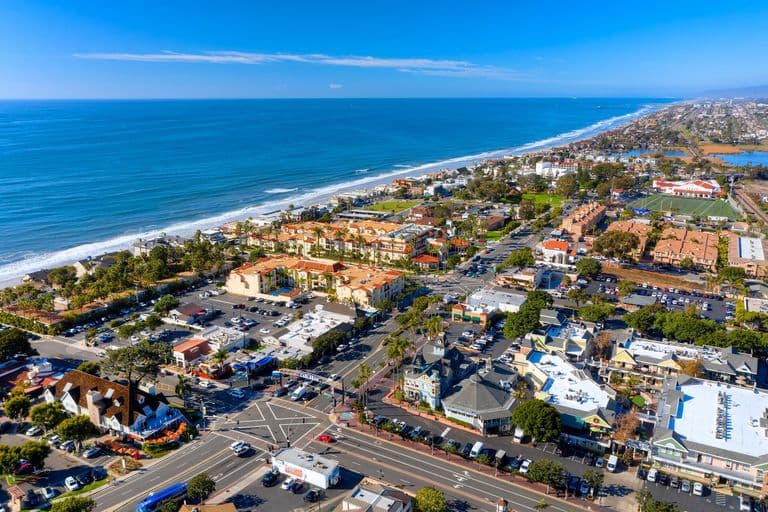
Village core, a lagoon system, and the golf-and-tech corridor inland. Bigger and less uniform than visitors assume.
Population
Median home value
Aug high / Jan low
To downtown
Carlsbad is a North County coastal city of about 112,000 people, the fifth-largest in San Diego County, stretching from Buena Vista Lagoon at the Oceanside line to Batiquitos Lagoon in the south and east into the hills of La Costa. The city took its name in the 1880s from Karlsbad, the Bohemian spa town, after a well drilled by settler John Frazier produced mineral water said to match the famous European springs. It incorporated in 1952. Today Carlsbad works as both a resort town and a major employment center. Tourists come for Legoland California, the spring bloom at the Flower Fields, and the walkable Carlsbad Village near the beach and Coaster station. Meanwhile, business parks around McClellan-Palomar Airport hold satellite company Viasat and the concentration of golf equipment makers, including Callaway and TaylorMade, that earned the area the nickname 'Titanium Valley.' Most residents live in master-planned neighborhoods built from the 1970s onward, such as La Costa, Aviara, Calavera Hills and Bressi Ranch, with Olde Carlsbad and the Village holding older homes. Redfin's median sale price was about $1.58 million in the three months ending August 2026. The city's key issues include meeting state housing targets, reusing the site of the retired Encina Power Station, and lowering the rail tracks through the Village into a trench, a long-term project meant to reduce noise and crossing delays.
Draws
Tradeoffs
Good for: Families and professionals who want suburban amenities, good schools and nearby jobs with easy beach access.
Palomar Airport sits on a mesa about 3 miles inland, so its summer highs run a few degrees warmer than the beaches along Carlsbad Boulevard. The marine layer is persistent from May through early July, especially in the Village and near the lagoons. The eastern La Costa hills see the warmest afternoons and the greatest exposure to Santa Ana winds and fire weather.
Aug avg high
Jan avg low
Annual rain
Best time to visit: March through early May for the Flower Fields bloom, or September and October for warm, clear beach days.
Typical home value $1,583,952 (+3.6% year over year) · median rent $2,808
Mostly master-planned single-family neighborhoods and townhome communities from the 1970s to 2000s in La Costa, Aviara and Calavera Hills, with older cottages and new condos in the Village and Olde Carlsbad.
Freeways: I-5, SR-78
Transit: Coaster stations at Carlsbad Village and Carlsbad Poinsettia; NCTD Breeze buses including Route 101 along the coast.
Parking: Village street parking is free but time-limited, and beach and Legoland-area lots fill on summer weekends and during the flower season.
Walkability: The Village and seawall are very walkable; the master-planned neighborhoods are car-dependent with good bike lanes on major roads.
Carlsbad combines beaches and lagoons with a strong local job base, newer planned neighborhoods and well-regarded schools. The city has about 112,000 residents. The main tradeoffs are high home prices, a median gross rent of $2,808, and car-dependent suburban areas.
Redfin reported a median sale price of $1,583,952 for the three months ending August 2026, up 3.6 percent from a year earlier. Zillow's Home Value Index, which covers all homes and not just recent sales, was lower at $1,361,646 in July 2026.
NOAA normals for McClellan-Palomar Airport show January averaging a high of 65 and a low of 48, and August averaging 76 and 65. Carlsbad gets about 11.8 inches of rain a year, with the beaches cooler than the airport mesa in summer.
Carlsbad is known for Legoland California, the spring bloom at the Flower Fields, its walkable village by the beach and its cluster of golf equipment makers.
The Flower Fields at Carlsbad Ranch typically bloom from early March into May, when the ranunculus fields open to visitors for the season.