safety

Neighborhood · City of San Diego neighborhood
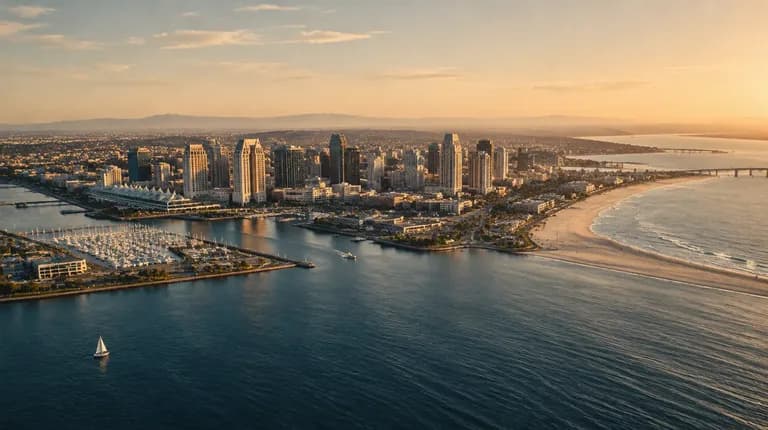
Two blocks wide, ocean to bay, with Belmont Park in the middle and nowhere to park anywhere.
Median home value
Aug high / Jan low
To downtown
safety
culture
safety
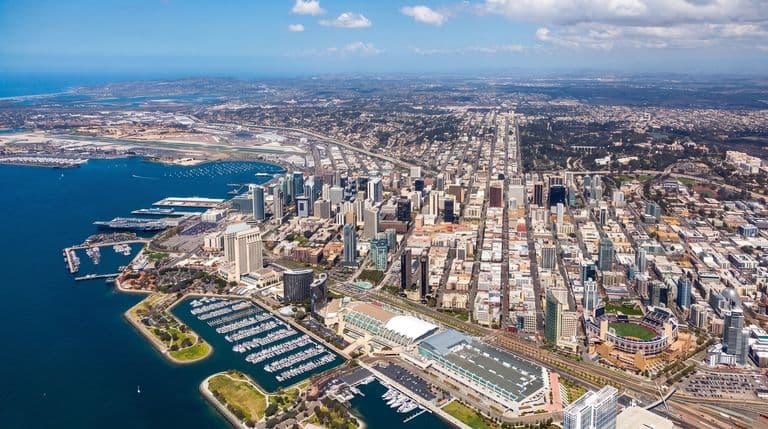
Mission Beach is a narrow sandbar, rarely more than a few blocks wide, with the Pacific on one side and Mission Bay on the other. Mission Boulevard runs its length, and the homes sit on short pedestrian courts and walk streets that end at the boardwalk or the bay. It was the last of San Diego's beach communities to fill in because building on loose sand was difficult; the official subdivision came in 1914, and John D. Spreckels sold small lots to lure buyers. Those lots are still the smallest in the city, typically 1,250 to 2,400 square feet, and the land-use designation of 36 dwelling units per acre makes Mission Beach the densest residential area in San Diego. The result is a patchwork of 1920s homes, 1930s and 1940s summer cottages and newer three-story rebuilds pressed shoulder to shoulder, many of them vacation rentals. Belmont Park, which Spreckels opened in 1925, anchors the south end with the wooden Giant Dipper coaster and the Plunge pool. In summer the population swells well beyond its year-round residents, and the boardwalk becomes one of the most crowded stretches of coast in Southern California. Off-season, the strip is quieter than its reputation, and residents get something rare: ocean and calm bay water within a two-minute walk. Zillow's typical home value here is about $1.83 million, the highest among the city's central beach neighborhoods.
A beachfront amusement park on the Mission Beach boardwalk, home to the 1925 Giant Dipper wooden roller coaster. Free to enter; rides ticket separately.
The Mission Bay marine park with coasters, animal habitats and shows — a full-day, ticketed outing.
Draws
Tradeoffs
Good for: Buyers and renters who want to live on the sand and are comfortable with dense, seasonal, tourist-heavy surroundings.
Surrounded by water on two sides, Mission Beach has among the most moderated temperatures in the city, with airport normals as a close proxy. Marine layer is common from May through early July and can hold over the sand all day. Afternoon onshore breezes are steady, which is why the bay side is popular with sailors and kiteboarders.
Aug avg high
Jan avg low
Annual rain
Best time to visit: Late August through October offers the warmest water and sunniest days, with fewer crowds after Labor Day.
Typical home value $1,831,880 (+3.2% year over year)
Cottages and duplexes on the city's smallest lots (about 1,250 to 2,400 square feet) along pedestrian courts and walk streets, with a growing share of three-story rebuilds and condos; bayfront and oceanfront homes command large premiums.
Freeways: I-8, I-5
Transit: MTS buses along Mission Boulevard connect Mission Beach with Pacific Beach and the Old Town Transit Center, where the trolley and Coaster stop.
Parking: Parking is scarce: the Belmont Park lot and south-end beach lots fill early in summer, and residential alleys are resident-only in practice.
Walkability: Everything on the peninsula is walkable, and the boardwalk and Bayside Walk make bikes the default for locals.
It suits people who prioritize direct beach and bay access over space and quiet. Lots are the smallest in the city, and summer brings crowds and vacation renters, but off-season the peninsula is walkable and relatively calm.
Zillow's typical home value for Mission Beach was $1,831,880 as of June 2026, up 3.2% from a year earlier. Oceanfront and bayfront homes sell well above that figure.
Mild and ocean-moderated. The nearby Lindbergh Field station averages highs of 66 degrees in January and 77 in August, with under 10 inches of rain a year. Early summer is often overcast.
Belmont Park's 1925 Giant Dipper wooden roller coaster, the boardwalk, and a skinny strip of homes between the ocean and Mission Bay. It is one of San Diego's busiest summer beaches.
Yes. The wooden coaster, open since July 4, 1925, runs at Belmont Park and is a National Historic Landmark. It was fully restored in 1989-90.